

Showing posts with label IBM. Show all posts
Showing posts with label IBM. Show all posts
Thursday, June 19, 2014
Watson in your pocket

Monday, February 17, 2014
This day in computing history
Friday, May 31, 2013
Watson in your pocket
IBM's Watson deep Q&A system that famously beat the two best Jeopardy players in a million dollar challenge a couple of years ago is now being commercialised as originally intended. IBM learnt a big lesson from their champion chess playing system Deep Blue, namely, "so what's the use now?" Deep Blue may have beaten Gary Kasparov but that was all it could do. Watson was always intended to be a proving ground for a new form of artificial intelligence that would enable people to ask unstructured questions in their own words and get relevant answers from a deep corpus of knowledge. Watson has already been tested with oncologists and now it's heading into customer service. The MIT Technology Review reports that, working in the cloud, you'll soon be able to access Watson from your smartphone; companies like the Royal Bank of Canada, Nielsen, and close to home the ANZ are rolling out Watson-based conversation assistants. You can think of Watson like Apple's Siri on steroids.
Wednesday, May 15, 2013
IBM release the worlds smallest movie
The video below is a little stop-motion animation made by IBM. Why would IBM researchers want to make a movie? So they can demonstrate that they can move individual atoms around - that's correct, the little dots that make up the movie are individual atoms!
The researchers aren't just having a laugh, they're actually trying to discover the smallest number of atoms that can store a bit of data. They're aiming to make an atomic memory data storage system. Once you've watched the world's smallest movie watch the "making of the world's smallest movie" for information on how and why it was done.
The researchers aren't just having a laugh, they're actually trying to discover the smallest number of atoms that can store a bit of data. They're aiming to make an atomic memory data storage system. Once you've watched the world's smallest movie watch the "making of the world's smallest movie" for information on how and why it was done.
Thursday, April 18, 2013
IBM's Watson helps cure cancer
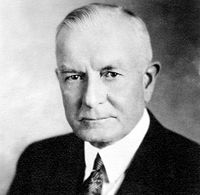
I'd obviously like this story wouldn't I. But, IBM's Watson system certainly isn't named after me or even after Sherlock Holme's sidekick, it's named after a former CEO of IBM. A couple of years ago Watson famously beat the two best Jeopardy! competitors to win $1,000,000 by answering (in real time) Jeopardy! questions. IBM then announced that Watson would be turned to work in healthcare. Archiving and searching the vast, and growing, corpus of medical literature. Clinical Ontology News reports that: "The Watson product in oncology, called Interactive Care Insights for Oncology, provides a Watson-based advisor, accessible through the cloud, that is intended to help identify individualized treatment options for patients with cancer, starting with lung cancer, ... In principle, oncologists anywhere will be able to access detailed treatment options to help them decide how best to care for a patient. To prepare for its work in oncology, Watson has taken in more than 600,000 pieces of medical evidence, and 2 million pages of text from 42 medical journals and clinical trials, ... Watson is able to search through 1.5 million patient records and provide physicians with evidence-based treatment options in seconds."
Wednesday, December 19, 2012
IBM predict computers will have all 5 senses in 5 years
IBM has made a prediction that in just 5 years cognitive computers will be able to see, hear, taste, touch and smell. Bernard Meyerson, Chief Innovation Officer at IBM says, "This year, we focused the IBM Next 5 in 5, our 2012 forecast of inventions that will change your world in the next five years, on how computers will mimic the senses:
Touch: You will be able to reach out and touch through your phone
Sight: A pixel will be worth a thousand words
Hearing: Computers will hear what matters
Taste: Digital taste buds will help you to eat healthier
Smell: Computers will have a sense of smell"
It's all described in this video below.
Incidentally, I've always been puzzled by the "5 senses" as I've always thought I have 6 senses - motion being the 6th. The awareness of being up or down, accelerating or decelerating moving forwards, left or right. To me that's a "sense," distinct from the other 5, but just as useful.
Touch: You will be able to reach out and touch through your phone
Sight: A pixel will be worth a thousand words
Hearing: Computers will hear what matters
Taste: Digital taste buds will help you to eat healthier
Smell: Computers will have a sense of smell"
It's all described in this video below.
Incidentally, I've always been puzzled by the "5 senses" as I've always thought I have 6 senses - motion being the 6th. The awareness of being up or down, accelerating or decelerating moving forwards, left or right. To me that's a "sense," distinct from the other 5, but just as useful.
Sunday, May 13, 2012
IBM celebrates the 15th anniversary of Deep Blue's victory
 |
| Kasparov vs. Deep Blue |
IBM have made a video that marks the anniversary and discusses the developments from Deep Blue.
Thursday, January 5, 2012
Thanks Mom
 |
| Mary and Bill Gates |
Tuesday, November 29, 2011
IBM's cognitive computing initiative - SyNAPSE
Not content with winning Jeopardy with Watson IBM is now combining principles from nanoscience, neuroscience and supercomputing in a cognitive computing initiative called Systems of Neuromorphic Adaptive Plastic Scalable Electronics (SyNAPSE). By reproducing the structure and architecture of the brain—the way its elements receive sensory input, connect to each other, adapt these connections, and transmit motor output—the SyNAPSE project aims to emulate the brain's computing efficiency, size and power usage without being programmed.
IBM say, "Today's computers are little better than calculators; ruled by the von Neumann architecture for over half a century, they use storage structures and programmable memory that scientists are endlessly aiming to improve. However, the human brain - the world's most sophisticated computer - can perform complex tasks rapidly and accurately using the same amount of energy as a 20 watt light bulb and consuming as much space as a 2 liter bottle of soda. Researchers at IBM and collaborating universities are working to build cognitive systems that can learn and perform complex tasks such as action, recognition and perception, while rivaling the low energy and power consumption of the human brain."
The IBM SyNAPSE project website is here with lots more information and videos.
IBM say, "Today's computers are little better than calculators; ruled by the von Neumann architecture for over half a century, they use storage structures and programmable memory that scientists are endlessly aiming to improve. However, the human brain - the world's most sophisticated computer - can perform complex tasks rapidly and accurately using the same amount of energy as a 20 watt light bulb and consuming as much space as a 2 liter bottle of soda. Researchers at IBM and collaborating universities are working to build cognitive systems that can learn and perform complex tasks such as action, recognition and perception, while rivaling the low energy and power consumption of the human brain."
The IBM SyNAPSE project website is here with lots more information and videos.
SyNAPSE: IBM Cognitive Computing Project - Overview
Thursday, June 16, 2011
Happy Birthday IBM
IBM will be 100 years old this week. This short video from the BBC shows how the company has changed over the years.
Publish Post
Publish Post
Subscribe to:
Posts (Atom)