It's always nice to see an article on A.I. in the local newspaper, The New Zealand Herald. So the article titled Autocorrect fails could be distant mammary as computers start to learn like us, by Sarah Knapton made for an interesting read. Here's a quote: "Most mobile phone users have suffered the indignity of an embarrassing autocorrect mistake, but smartphones may soon be smart enough to understand what we are trying to say." Scientists claim that for the first time, they have programmed a machine to learn in the same way as humans. I recommend the full article.
A recent article in The Atlantic titled The Moral Failure of Computer Scientists argues that computer scientists should take on the surveillance state rather than providing governments with the tools to strip away citizens privacy. Phillip Rogaway, a professor of computer science at the University of California, Davis, puts forward his opinion in an interview with journalist Kaveh Waddell.
My colleague Mark Wilson brought this to my attention.
Our very own Clarke Thomborson! The iSANZ Awards are a showcase of excellence in New Zealand information security. Their mission is to formally recognise the achievements of outstanding New Zealand InfoSec professionals, companies and initiatives / events. The Best International Superstar award category is open to individuals who achieved significant results in the development or promotion of work that has had a high international profile. Clarke won the award for his contributions in trust, identity and privacy management which have helped significantly raise the profile of ICT within New Zealand.
We're all used to Google Earth and the phrase "large enough to be seen from space" has little meaning now when you can see my patio furniture on Google Earth. But, high quality satellite images have been generated since the 1960s. Many of these have been declassified and are available on the US Geological Survey's Earth Explorer website. These images are not restricted to the US - they're spy photos so the whole world is pretty much covered. The interface takes a bit of figuring out but there are a lot of resources available on the site. Many researchers, such as archeologists, are finding these images very useful, as is reported in this National Gepgraphic article.
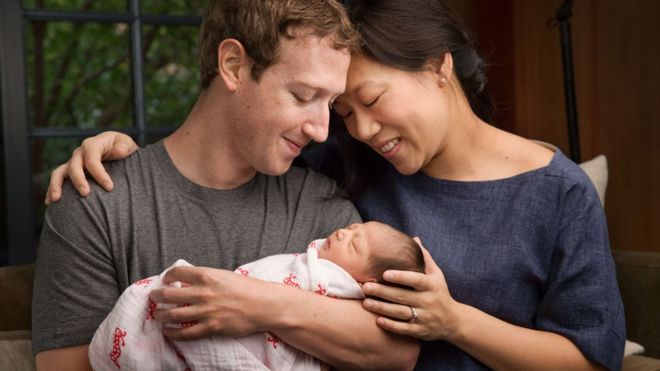
Facebook became more popular yesterday as its founder Mark Zuckerberg and his wife Priscilla Chan pledged 99% of their shares in Facebook to charity to mark the birth of their first child. These shares are currently valued at around $45 billion. This will leave the Zuckerberg family with a mere half billion dollars to scrape by on. Actually I'm not being facetious, I commend Zuckerberg for his actions, nobody needs such a vast fortune and in the hands of well-run charities such huge sums of money can make a real difference. I hope more billionaires follow suit. When you use Facebook now you can know that you are helping make the world a better place.
Imagine this scenario; you are in your new driverless car and a situation arises (doesn't matter how) where the driver (the computer) has to decide between crashing into a group of young school children, probably killing several, or slamming the car into a wall and probably killing the passenger, i.e. you! Simple ethics would recommend taking a least harm approach, but that means maybe killing you. Would you buy a car programmed to kill you? Or would you prefer to buy one that would make the less ethical choice and always seek to protect the car's occupants. These ethical dilemmas are coming to the fore with the advent of autonomous systems. Several years ago the UK's Royal Academy of Engineers published a report on the ethics of emerging technologies and autonomous systems. More recently MIT Technology Review posted a piece titled Why Self-Driving Cars Must Be Programmed to Kill. My colleague, Paul Ralph, also just gave a radio interview on this subject.