I've made a couple of posts about home automation and the growing Internet of Things (IoT); automating my house is a sort of hobby. As the uptake grows users (and manufacturers) need to take security much more seriously, since it's possible for an insecure device to compromise an entire home network. For example, a popular first IoT device for new parents is a WiFi and cloud-connected baby monitor with webcam. Parents understandably love the idea of being able to check up on their baby (and the baby sitter) using their smartphone from anywhere. However, many of these webcams are insecure and there is now a search engine for the Internet of Things (IoT), called Shodan, that lets users easily browse vulnerable webcams. This is disturbing, creepy and potentially dangerous. Arstechnica recently published a piece that makes a good argument that users need to take more responsibility, but that manufacturers must also play their part by designing security into IoT devices. If necessary, governments may have to legislate.
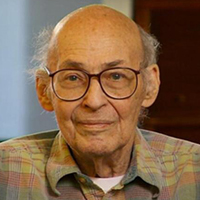
Marvin Minsky, one of the founding fathers of AI has died, aged 88. As a graduate AI student his book The Society of Mind was very influential on my understanding and approach to AI (I still have my copy on my office bookshelf). An article by MIT's Technology Review does a good job of outlining his contributions, in AI and beyond, and "What Marvin Minsky Still Means for AI".
Everyone wants to work for Google, Facebook, Apple or preferably the next big tech company (well at least lots of our students do). Silicon Valley is booming like never before and San Francisco has become a dormitory town with real estate prices going through the roof and locals being priced out of traditional neighbourhoods. Understandably this is causing some resentment against the tech company employees. However, it's not just the obvious people who are starting to question if the Silicon Vally boom is healthy. This piece, by Andrew Yang, called What's eating Silicon Valley asks some very interesting questions about how sustainable this all is. Thanks to my colleague, Mark Wilson, for noticing this.
"A Million Random Digits with 100,000 Normal Deviates" is an unlikely title for a best seller but this book has been in print since 1955. If you're a mathematician you'll know that it's actually very hard to generate truly random numbers and since random numbers are widely used by statisticians, physicists, poll takers, market analysts, lottery administrators, and others this publication was designed to solve that problem. So, if you are in the need of a series of random numbers this book is for you.
Happy New Year. This blog is back from its annual holiday. Some of you will probably have received a fitness tracker, such as a Fitbit, for a Xmas present. So-called "wearables" had a very good year in 2015 and 2016 look to be even better. This article in Wired explores the trends and suggests that wearables are soon to become even more wearable.
It's always nice to see an article on A.I. in the local newspaper, The New Zealand Herald. So the article titled Autocorrect fails could be distant mammary as computers start to learn like us, by Sarah Knapton made for an interesting read. Here's a quote: "Most mobile phone users have suffered the indignity of an embarrassing autocorrect mistake, but smartphones may soon be smart enough to understand what we are trying to say." Scientists claim that for the first time, they have programmed a machine to learn in the same way as humans. I recommend the full article.
A recent article in The Atlantic titled The Moral Failure of Computer Scientists argues that computer scientists should take on the surveillance state rather than providing governments with the tools to strip away citizens privacy. Phillip Rogaway, a professor of computer science at the University of California, Davis, puts forward his opinion in an interview with journalist Kaveh Waddell.
My colleague Mark Wilson brought this to my attention.